The UN General Assembly's big week is winding down in New York, but the real action ran through the world's oil lanes. A peace offer over the Strait of Hormuz was turned down, a trade truce bought a little more time, and a flood swamped one of Asia's great capitals. Here are the five headlines that matter, in five minutes.
Trump rejects Iran's seven-day plan to reopen Hormuz
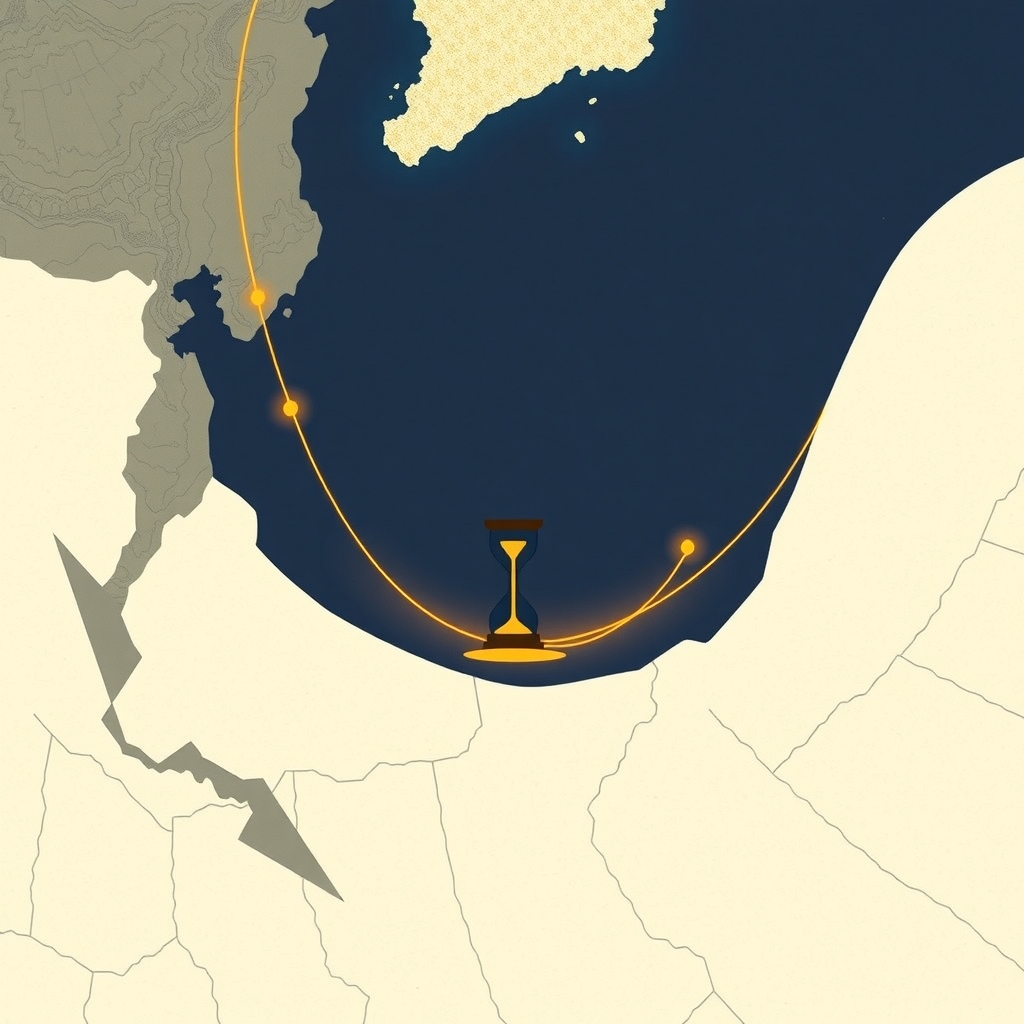
Iran used the UN General Assembly on September 25 to table a roadmap: reopen the Strait of Hormuz and restart talks within seven days if Washington releases frozen Iranian funds, lifts oil sanctions and ends its naval blockade of Iranian ports. A day later, Donald Trump said the proposal "would not be acceptable", arguing Iran wants a deal because it is losing. Foreign Minister Abbas Araghchi replied that no rejection had arrived through the mediators and that Iran "will not back down" on its conditions.
Why it matters: the US-Israel war on Iran began on February 28, and Iran's closure of the strait has choked one of the world's most important oil routes ever since. Oil prices have swung with every headline, and rising crude pushed the US 10-year Treasury yield toward 5.20 percent this week, its highest since 2007. That means dearer borrowing for governments, companies and homebuyers far from the Gulf.
What to watch: whether envoy Steve Witkoff's channel produces a counter-offer, or whether the blockade and the closure grind on into winter.
Houthi strikes pull Saudi Arabia's allies closer
The war in Yemen is spilling deeper into Saudi Arabia. On September 24 the Houthis claimed strikes on Aramco facilities in Yanbu and a target in Riyadh, and Saudi forces said they intercepted six ballistic missiles. Two days later the Saudi-led coalition said it downed two drones headed for Riyadh and two missiles aimed at Khamis Mushait.
Why it matters: this is where two oil crises meet. The Houthis now hold the port of Mocha and Red Sea islands, giving them sway over the Bab al-Mandeb strait, which usually carries about 12 percent of global oil trade. The attacks have pushed Saudi Arabia to send some crude back through Hormuz instead of its pipeline to Yanbu, and Brent briefly topped $108 a barrel on September 24. Friends are rallying: France is sending soldiers, radars and air defences to guard the Yanbu terminal, while Pakistan and Turkey have opened urgent military talks with Riyadh under their joint defence pact.
What to watch: whether that pact turns into troops on the ground, making Yemen's war a wider regional one.
US and China buy two more months of trade peace
Xi Jinping's state visit to Washington ended with pageantry and a short extension. Treasury Secretary Scott Bessent said the trade truce struck in Busan last year, due to lapse in November, now runs through January 10. The summit came with an airport welcome and a state dinner attended by tech chiefs including Nvidia's Jensen Huang and Apple's Tim Cook.
Why it matters: this is about money, and it is a holding pattern, not a deal. Experts expected few concrete results, and big agreements on AI safety were not on the cards. China holds real leverage through its grip on rare-earth minerals, which factories worldwide depend on, and electric-vehicle technology; one veteran China scholar said Trump had shifted from "bullying mode into pander mode." Taiwan remains the sharpest edge: Beijing's ambassador called it a "red line," and a US official said Trump would decide on a new arms package soon.
What to watch: January 10. If the truce lapses without a deal, tariffs could climb again and shake supply chains from Shenzhen to Ohio.
Ukraine waits on a proposed peace meeting in the Gulf
Volodymyr Zelenskyy said on September 25 that Washington has proposed a meeting of US, Ukrainian and Russian officials in the United Arab Emirates, and that Kyiv is awaiting a date. He also doubted Moscow's intentions, saying Russia is not preparing to end the war "at least not at this point." The fighting went on: attacks overnight into September 26 killed at least 10 people on both sides, and a Ukrainian strike damaged an oil refinery in Russia's Krasnodar region.
Why it matters: Europe is testing its own channel. Germany's Johann Wadephul and Russia's Sergey Lavrov held their countries' first high-level talks since the 2022 invasion on September 26, covering the war, Black Sea grain exports and energy. Lavrov said he "learned nothing new." Energy is the pressure point on both sides: Kyiv keeps hitting refineries, and Zelenskyy has offered an energy ceasefire if Russia matches it.
What to watch: whether a UAE date is set, and whether Russia accepts talks it has long refused.
Floods force thousands from their homes in Bangkok
More than 330 millimetres of rain fell on parts of Bangkok between Thursday and Sunday, and city officials said nearly 4,900 people had moved into shelters and about 52,000 households were affected. A disaster declaration covers the capital, more than 10,000 soldiers are helping with relief nationwide, and hundreds of schools were set to close on Monday. The US Embassy warned of heavy rain and flooding across Thailand.
Why it matters: Bangkok is a manufacturing, tourism and finance hub for Southeast Asia. September is Thailand's peak rainy season, but residents said this year felt worse: one said his house was underwater for about 30 hours, and some said the water rose higher than in 2011, when floods killed more than 500 people. Panic-buying emptied shop shelves, and officials warned against price gouging. It is also a warning for low-lying megacities everywhere as extreme rain grows more common.
What to watch: how fast the canals drain once the rain eases, and the bill for businesses and insurers.
Quick answers
Why did Trump reject Iran's Hormuz proposal?
Iran asked the US to release frozen funds, lift oil sanctions and end its naval blockade in exchange for reopening the Strait of Hormuz within seven days; Trump said the plan "would not be acceptable," Al Jazeera reported.
When does the US-China trade truce expire now?
After the Trump-Xi summit, Treasury Secretary Scott Bessent said the truce was extended through January 10, NBC News reported.
How many people were affected by the Bangkok floods?
Nearly 4,900 people were in shelters and about 52,000 households were affected after more than 330 mm of rain, The Star reported.
Sources
- Al Jazeera: Trump rejects Iran's seven-day roadmap to end war and reopen Hormuz
- Transport Topics (AP): Oil prices decline as investors look for signals on Hormuz
- Al Jazeera: Saudi Arabia allies line up support as Houthi attacks mount
- The National: Saudi coalition says it intercepted Houthi drones headed for Riyadh
- NBC News: Trump-Xi summit amid tensions over Taiwan, trade and AI
- Al Jazeera: At least 10 people killed in Russian and Ukrainian attacks
- Al Jazeera: German, Russian foreign ministers hold rare talks amid rising tensions
- Kyiv Independent: Ukraine 'ready for energy ceasefire,' Zelensky says after meeting Trump at UN
- The Star: Bangkok floods send thousands into shelters after days of rain
- US Embassy Thailand: Weather alert, heavy rain and flooding (September 26, 2026)
Also in the network
- Top 5 US stories, October 18, 2026: Trump backs Netanyahu, warns Iran · thepressusa.com